2025 marked my second attendance of the Extended Semantic Web Conference (ESWC 2025) and was it a good one! Besides the opportunity to meet friends and colleagues once again, the highlight for me was without doubts the opportunity to attend the 1st OPAL workshop where ODRL was the star of the show!
Here are some notes from OPAL and the conference in general. Needless to say, I am already looking forward to the next one 😊
OPAL 2025 at ESWC 2025
The ODRL And Beyond: Practical Applications And Challenges For Policy-Based Access And Usage Control (OPAL 2025) workshop was for the very first time organised at the Extended Semantic Web Conference (ESWC 2025) by the lovely Andrea Cimmino, Nicoletta Fornara, Víctor Rodríguez-Doncel, and John Domingue, with a call for contributions focus on topics like
- Data governance and management in centralised and decentralised Knowledge Graphs
- Policy enforcement and conflict resolution in real-world applications
- Formalization of user and organisational preferences for data sharing using ODRL
and more. Throughout the day, the workshop had an average of 17 attendees, which had the opportunity to see the presentations of 8 regular and 2 short papers. The proceedings of the workshop are now online at https://ceur-ws.org/Vol-3977/, so you can check out all contributions there.
Beyond that, there was a round table to discuss current challenges and futures directions for ODRL, which are summarised here. These will prove themselves as very useful to guide new discussions at the W3C ODRL CG and hopefully will help shape any new iterations of ODRL.
Here’s a nice picture of the OPAL attendees!
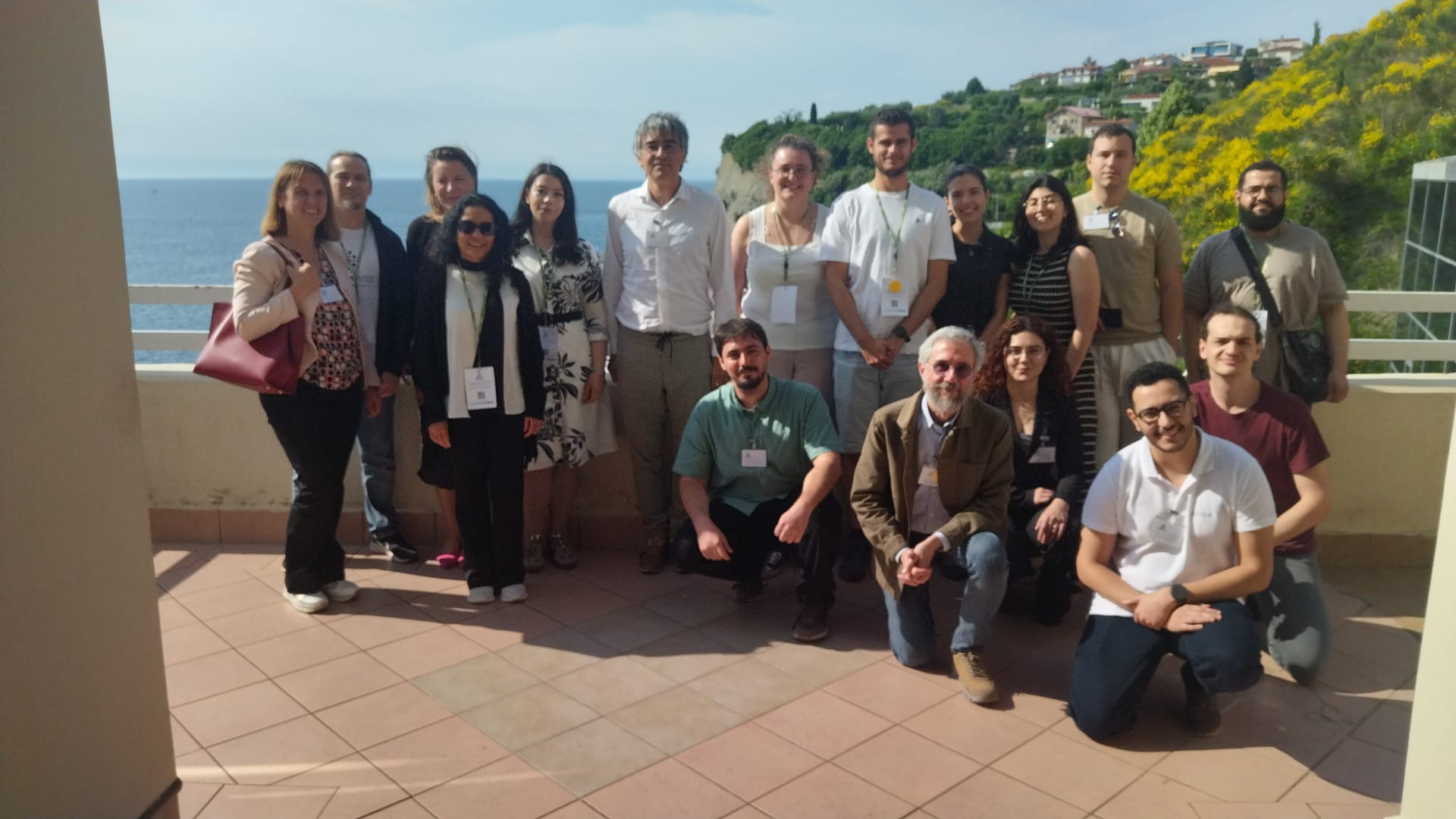
Finally, here are some highlights of the workshop (they reflect my opinion only 😉)
Terms of Service as ODRL policies
The first highlight of the workshop was hearing about the work that Elena Molino-Peña et al. are doing around Terms of Service. Check out their paper and the Terms of Service Language ontology (TOSL).
Their focus was on building an ODRL profile to tackle the representation of contractual terms of Software as a Service Terms of Service (ToS), enabling the precise definition of terms related to arbitration, applicable law, content removal, liability and modification/termination clauses. The ultimate goal is to prevent the inclusion of unfair terms in ToSs and support legal requirements such as the ones coming from the EU Directive on Unfair Contract Terms.
The Terms of Service Language ontology (TOSL) proved itself useful to model real-world use cases, as well as a basis to detect abusive terms. Check out a cool example derived from GitHub’s ToS (extracted from the paper):
@prefix dcterms: <https://purl.org/dc/terms/> .
@prefix odrl:    <https://www.w3.org/ns/odrl/2/> .
@prefix rdf:     <https://www.w3.org/1999/02/22-rdf-syntax-ns#> .
@prefix tosl:    <https://w3id.org/tosl#> .
@prefix :        <https://ex.org/> .

# Agreement definition
:agreement01 a odrl:Agreement ;
  odrl:assignee :customer01 ;
  odrl:assigner :github ;
  tosl:liability :liability01 ;
  tosl:onDispute :litigation01 .

# Liability definition
:liability01 a tosl:Liability ;
  dcterms:description '''GitHub's maximum liability to Customer
  for any incident (...) will not exceed the amount Customer
  paid for the Product during the 12 months before the incident''' ;
  rdf:value tosl:anyLiability ;
  tosl:liableParty :github ;
  tosl:targetParty :customer01 ;
  tosl:limitation [
    a odrl:Constraint ;
    odrl:leftOperand tosl:totalAmount ;
    odrl:operator odrl:lteq ;
    odrl:rightOperand :consumerQuote12Months ;
  ].

# Dispute resolution definition
:litigation01 a tosl:Litigation;
  dcterms:description '''If Customer's principal office is European
  Union (...) Agreement will be governed by the laws of Ireland''' ;
  tosl:takesPlaceIn :DublinCourts ;
  tosl:governedBy :IrelandLaw ;
  tosl:targetParty :customer01 ;
  tosl:condition [
    a odrl:Constraint ;
    odrl:leftOperand tosl:consumerResidentCountry ;
    odrl:operator odrl:isAnyOf ;
    odrl:rightOperand "ES", "DE", "PT", "IT"
  ].

:DublinCourts a tosl:Jurisdiction;
  dcterms:description "Disputes jurisdiction of the Dublin courts" .
:IrelandLaw a tosl:Law ;
  dcterms:description "Governed by the laws of Ireland" .
I still want to check how some of these terms can be added to DPV, as well as how to integrate the usage of terms that are already in DPV, i.e., DPV’s location extension would be great to re-use for identifying countries and unions such as the European Union.
Formal semantics of ODRL
My second highlight goes to work being done on a formal semantics for ODRL. On this topic, there were two especially interesting works being presented:
- Piero Andrea Bonatti, Nicoletta Fornara, and Andreas Harth, “Towards a Formal Semantics of the Open Digital Rights Language (ODRL 2.2)”, and
- Andrea Cimmino, Nicoletta Fornara, “Improving ODRL 2.2: current limitations and theoretical solutions”
Bonatti et al. focused on the current informal semantics of ODRL and provide first steps for a declarative semantics of ODRL, namely looking at how to formalize
- constraint operators,
- left operands and world states,
- permissions and prohibitions without duties and remedies,
- introducing temporal constraints to comply with duties, amongst others.
As for Cimmino and Fornara, they highlighted gaps on ODRL to be solved on a future version 3.0, categorising them in terms of descriptive and behavioural semantics, and offered a series of proposals to tackle them, namely by:
- Refining the operands, operators and actions in the ODRL vocabulary
- Introducing and describing the concept of state of the world as a Knowledge Graph
- Introducing a policy status concept
- Extending ODRL to support the specification of various types of policies
- Introducing SPARQL-based evaluation rules
- Introducing the notion of policy templates & variables
Interoperable policy engines at ESWC
Not at OPAL, but also related to policies, in the main conference, we presented our latest work, led by Wout Slabbinck, on interoperable policy engines (check out an open-access version).
This paper proposes a systematic approach to evaluating ODRL policies, looking at the formal semantics for ODRL draft specification, to enable meaningful negotiation over privacy preferences on the Web, introducing a Compliance Report Model, a test suite, and our very own implementation of an ODRL Evaluator to support accurate, interoperable, and enforceable policy interpretations in line with regulatory requirements.
We got very good feedback to make future improvements to the work, also in the form of a 🌟 nomination for best resource paper 🌟, and are currently in discussions to integrate the Compliance Report Model in the work being done on the ODRL formal semantics specification by the W3C ODRL CG.
Quite recently we also started to work on a demo that allows users to test this work on the Web. More on that on a future post 😜
Looking towards the future
That’s a wrap! I’m looking forward to seeing what the second half of 2025 (and 2026) brings us in terms of work on policies and in particular on ODRL.
Beatriz